



2 June, 2026
90 minutes in the life of a child in Haiti
What is life like for a child in Haiti, during the World Cup.








The World Cup is underway. Stadiums are full, flags waving, nations are stepping onto the pitch with pride. Among them is the Haitian national team, returning to the World Cup for the first time in 52 years.
But beyond the noise, beyond the goals and the glory, there’s another question: what does life actually look like for a child in Haiti today?
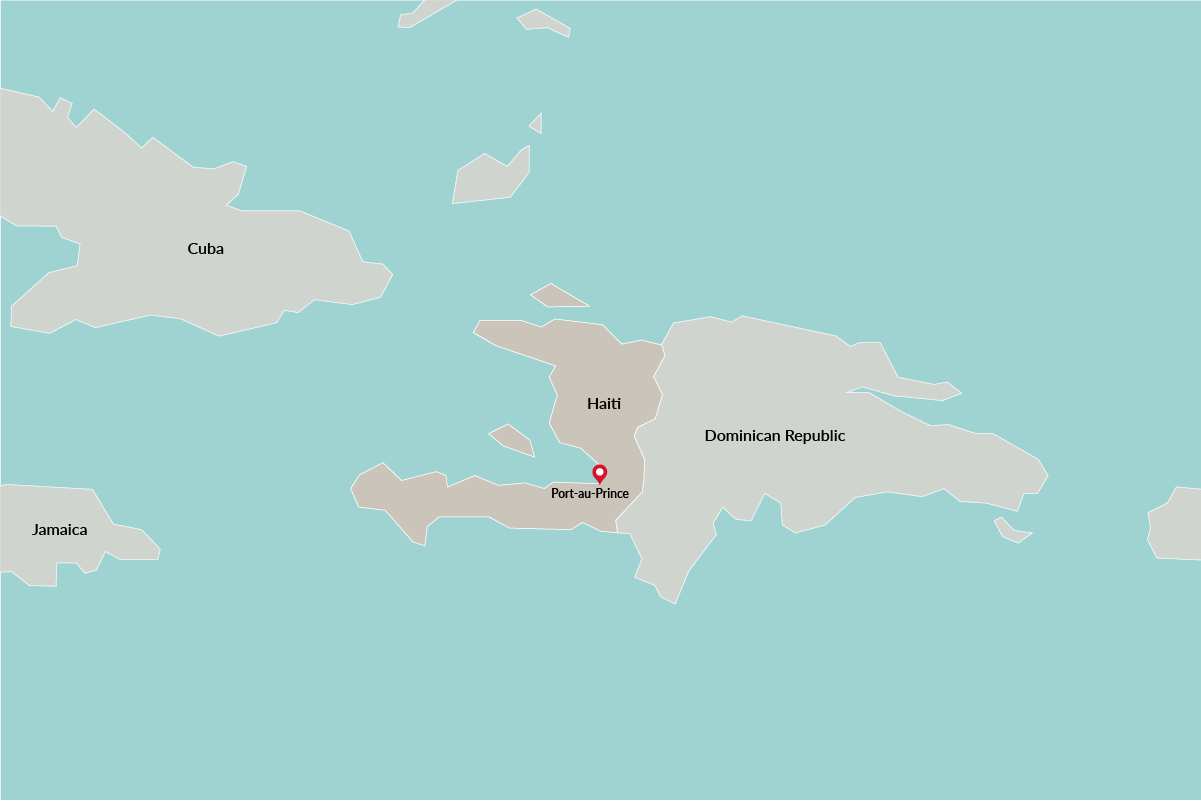
Haiti is in the Caribbean, where warm tropical weather and rugged mountains shape daily life, alongside coastal plains and fertile valleys where many families depend on farming.
Haiti has also faced decades of overlapping challenges. From the devastating earthquake in 2010 that reshaped lives and communities, to repeated storms - including a devastating hurricane last year - and ongoing economic hardship. More recently, the situation has become even more fragile. Escalating gang violence, particularly in and around the capital, has forced families from their homes, disrupted schools and livelihoods, and left many communities living with constant uncertainty.
In a place where many families face poverty, instability and continued violence that has forced people from their homes and disrupted everyday life, the reality away from the pitch can feel very different.
So instead of 90 minutes of football, step into 90 minutes of real life.
Enter Davidson. He’s 13 years old. And this is his match.
Warm-up and kick off
Davidson’s on the ball early. He’s up with the rising sun, a book in his hand, eyes fixed on the page as he turns it, then another. This is his warm-up for the day, his way of focusing and getting ready for what lies ahead.
But there was a time when this meant more than preparation. It was his way of keeping up, of continuing to learn and holding onto a sense of future, even when it felt like it might slip away.
Moving down the pitch
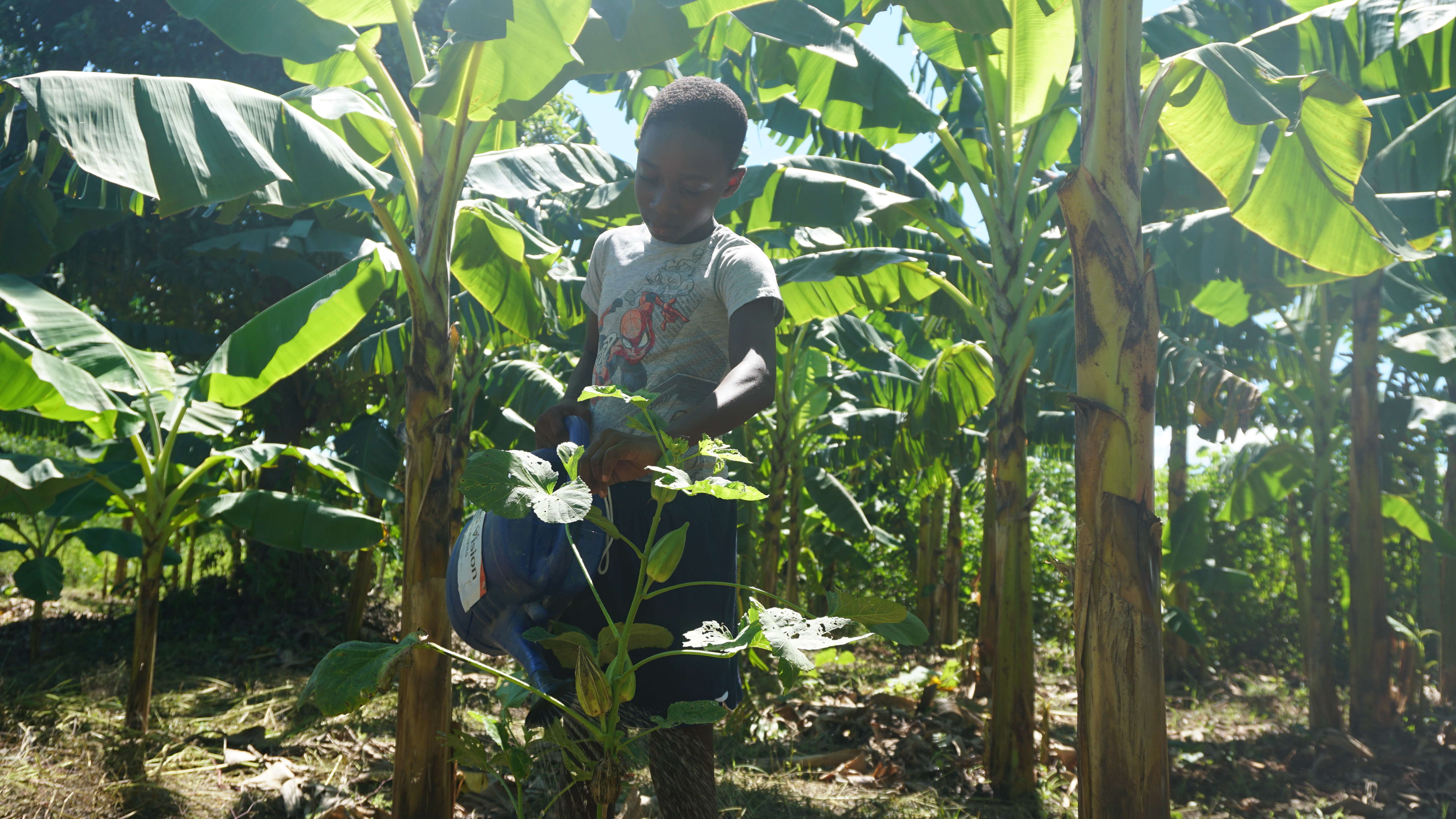
He closes his book and heads out the door and into the garden. This is his pitch, where the action happens and where everything unfolds.
He moves down the line, early light filtering through banana leaves overhead. Cabbages, aubergines and chillies. Rows of growth stretching out in front of him. His father is already there, hard at work.
Davidson steps in, a light touch, carefully picking what’s ready.
But rewind a few years, and this same ground told a different story. There were no quality seeds, no proper tools, and little reward for the effort. His father kept working, but the garden couldn’t produce enough to sustain his mother’s small food business.
They were on the back foot from the start.
A widening gap on the scoreboard
The sun is already high, the heat building quickly. Davidson moves faster now, working against the clock to gather what he can before it’s time to leave for school.
There was a time when Davidson felt like he was on the sidelines. Out of the match. Life paused and uncertain. When his mother’s business collapsed there was no money left for school fees.
“It made me very sad,” Davidson shares, “because I will be one year behind in finishing my studies.”
Half-time and a shift in play
His basket is filling steadily now, echoing the rhythm of last year’s harvest.
Because in 2024 everything changed. Through a World Vision community run programme, Davidson’s family received everything they needed to invest in their garden. Tools, seeds, training and much needed hope to begin again.
This time the land responded. Rows that once struggled began to produce and effort started to count for something. The first harvest came in strong, with hundreds of cabbages, eggplants and carrots, enough to provide regular meals for the family, and surplus left over to sell. There was now money to pay school fees and provide uniform and resources for Davidson and his sister.
For the first time in a long time, there was movement. The pressure began to lift and slowly, steadily, life shifted forward. The garden reflects this momentum, and now, as Davidson gathers his harvest, it’s clear just how much has changed.
The goal
His basket is full now. He passes it to his mother, brushes the soil from his hands, and heads inside. Books are packed quickly before he sets off down a dusty track toward school, his sister walking alongside him.
For Davidson, this has always been the goal: to return to school, to keep learning, to prepare for what comes next.
“My dream is to become a school teacher,” he says. “I love being the one in front of the blackboard, explaining to others something they don’t understand.”
Full-time?
Not yet.
Because this is only 90 minutes, just one glimpse into a much bigger story. Across Haiti, many children are still facing significant challenges and uncertainty, as poverty, hunger and instability continue to shape daily life. Many families are struggling to meet basic needs, and rising violence has forced large numbers of people from their homes, disrupting livelihoods, education and access to food.
But Davidson’s story shows that change is possible. With support from World Vision, families are able to rebuild what was lost and create new opportunities for their children to learn, grow and plan for the future.
Can you help us change the lives of more children like Davidson?